How to Design a Bathroom That's Both Accessible and Stylish
Much home renovation guidance assumes that you tacked access design onto your bathroom at the last minute as a sweetly harmless but necessary safety feature in an otherwise complete place. Some grab rail over there, some higher toilet seat here. The sort of thing you contemplate five minutes later, if at all.
Even this merits a little pushback. Because the bathrooms do not merely stand out as those that carry on to reside in a household through damage, contamination, small children, and old physiques are those by which congeniality was integrated at first or even snuck just from the sidelines.
But increasingly, the logical design that makes a bathroom actually functional is the same one that makes it foxy.
This is not a step-by-step guide for compromise, but more so planning out a bathroom for everybody who is ever going to use it, without being too overtly based on a list.
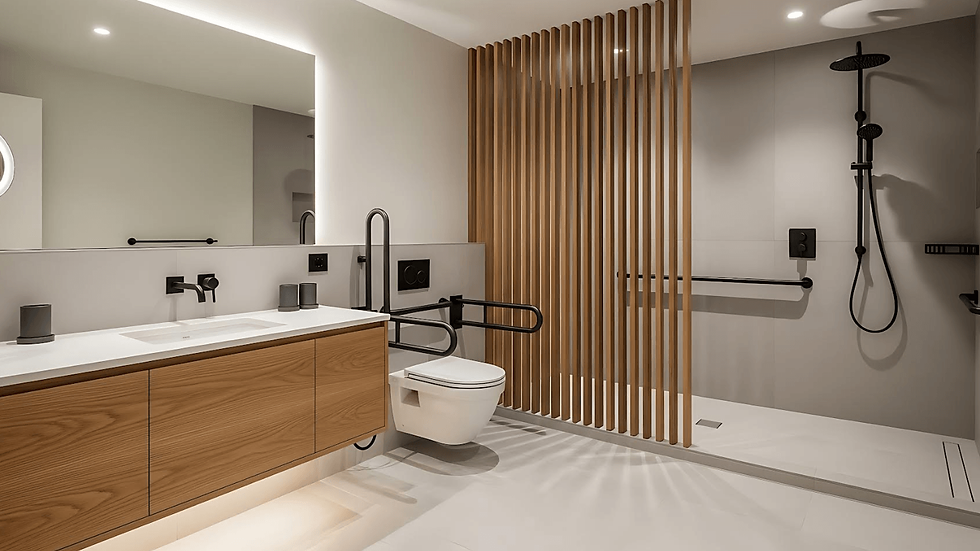
Start with the floor plan
The accessible restrooms are set up before the initial tile is positioned. Much of it is done through the layout itself. Two small circles turning in standing space — an area of 1500mm × 1500mm seems better.
Wider door frames (900mm clear is the number you hear) will only help with wheelchair access, but if you’ve got toddlers or laundry baskets to carry, or just so it feels more like a room rather than a cupboard, breathing space.
Because if your existing particular footprint is tight! A floor-level shower recess, a versatile suspended vanity to clear the floor and planning considered around door swing points/depth of storage can achieve so much. It is a hidden door face down to reclaim square footage you did not know was there.
Water Regions — Avoid Obstacles Whenever Possible
We have reached the part of accessibility design that gets real. The shower.
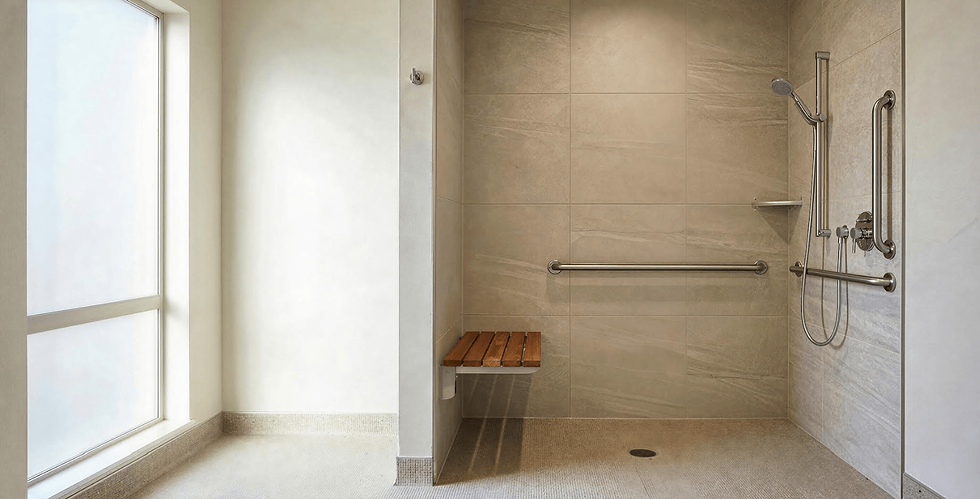
A curbless shower — one where the floor slopes softly to the drain with no step up or down — is perhaps your best single practical move. It eliminates a trip hazard for everyone, it simplifies cleaning, and even users with mobility aids can use the space without any apparent compromise in "accessible design."
From a styling perspective, it just looks better. Large-format tiles flow throughout, and nothing else assimilates so well with them.
A shower seat of any description, fixed or fold down, provides hugely improved day-to-day usage — even for non-mobility problem users. After a big run, after surgery, after a long day of kicking ass: the shower is exactly where many wished they had put that sit-down seat weeks prior. Combine it with a handheld shower on a rail, which creates flexibility if the room needs to do double-duty.
Thinking about surfaces and fittings
Anything that can get wet has to follow non-slip flooring requirements, and there are dozens of different types and styles about so you should not have to compromise looks.
Whether it be honed stone, textured porcelain or a matte rectified tile, no tile can provide grip without reading as "safety flooring". The slip resistance rating when wet — usually R10 minimum for most bathrooms, moving up to R11-12 for the floors of showers and other areas in wet zones.
Lever handle wall taps over knobs is another small change that has huge usability benefits. They are easier on the whole hand, more handy one-handed and cleaner in the work zone. It’s also just that lever taps are the current it, so you aren’t compromising on access for look; you’re simply choosing a better design.
Conventional grab rails have surely come a long way since back then, though. Those ones I feel are worth pinpointing today, which you can presently nab in matte black garb, respectively, brushed applied brass and chrome surfaces that hit all the markers connected to the rest of your hardware.
Clever positioning — beside the vanity, in the shower nook, next to the loo — then travel beyond clinical appendages and become genuine as design elements. The more savvy designers are even mixing towel rails that become grab rails in an ingenious way, one deserving of a regular place in any bathroom worth its salt.

Toilet: where specification counts
Ambulant toilet. The term, which reappears again and again in accessible design for home and commercial use, an ambulant toilet, is worth getting right.
Ambulant toilets are designed for use by physically disabled people who have impaired ability to walk, such as arthritis or hip replacements, or conditions that weaken the lower limbs.
The spec tends to be drawn together as a pan height from floor to seat of 460mm-480mm, which helps customers sit down or rise with less exhausting effort; either side fitted with grab rails within easy reach.
Best practice inside the home when utilising an ambulant toilet is alongside a defined transfer zone — typically with 800mm to 900mm of clear space on at least one side of the pan. This gives a user of a mobility aid space to move, or experience claustrophobic feelings, whatever the user uses. If you can make room on either side without compromising your layout, go for it.

Accessibility through lighting and storage
Two concepts that will hardly make it to an accessibility checklist but are critical in practice are light and storage.
Dark bathrooms are really a lot harder to get used to securely — for everyone, certainly; however, by all probability, the older types of illuminated vanity locations (lighting at face level, not simply over the head) reduce care errors. A room at 2 am, and that in itself is a significant margin of error when it comes to safety.
Storage that is an easy stretch away if you need it, with none requiring climbing on tiptoes or low-level bending to access, and blocking floors that can not be covered.
The form follows function core ethos was realised in a deep drawer at the perfect height neatly beneath the vanity, wall niches recessed inside the shower recess, and hooks hung high but only just so that they are always within arm's reach, resulting in no functional limitations to this bathroom whatsoever.
The best public restrooms never label themselves as such. Because the truth is, they’re just so quietly, understatedly reliable — and this ambulant specification, the curbless shower, lever taps and well-planned grab rails are just solutions that allow them to remain that way.
Jenny Kakoudakis is a seasoned interiors blogger that follows and writes about design trends. She launched the award-winning Seasons in Colour in 2015 and the luxury property and interior decor blog www.alltheprettyhomes.com in 2024 to cover all your interior design, travel and lifestyle inspiration needs.


