Media Walls to Mood Lighting: How to Layer Light and Texture in Your Home
Walk into a room where everything is lit by a single overhead bulb and you'll notice it immediately, even if you can't quite name what's wrong. The furniture might be beautiful, the colours carefully chosen, but the space feels flat. That's the flat room problem, and the fix has very little to do with buying anything new.
The answer lies in how light and texture work together. When you layer different light sources across a room and pair them with a considered mix of materials, something shifts. The space gains depth, warmth and a quality that interior designers spend entire careers trying to bottle.
The good news is that it's far more achievable than it sounds, and the media wall has quietly become one of the most powerful tools for getting it right.
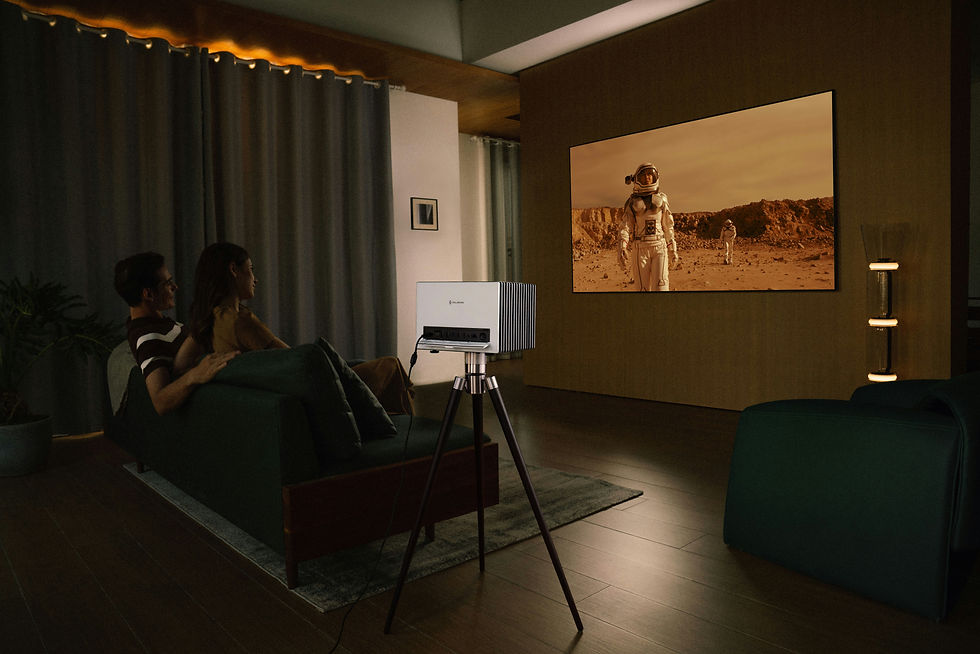
Start with the three layers of light
Before touching anything else, it helps to understand the framework that designers work to. Every well-lit room is built on three layers: ambient, task and accent.
Ambient light is your general, room-wide illumination.
Task light is focused and functional, aimed at specific areas where you read, cook or work.
Accent light is the creative layer, used to draw the eye, highlight texture and create atmosphere.
Most homes only have the first layer, which is why so many well-furnished rooms still feel flat after dark. The real transformation happens when all three are working together, and as Seasons in Colour's guide to ambient, task and accent lighting shows, even modest additions to the secondary layers can shift a room's atmosphere completely.
The relationship between light and texture is what makes this worth doing properly. Light behaves completely differently depending on the surface it falls on.
Matte materials like raw plaster, chalky paint and untreated timber absorb light and create a soft, diffused warmth.
Glossy surfaces reflect it, which can add drama but can also create distraction if it's not controlled.
Once you understand this, material choices stop being purely aesthetic decisions and start becoming lighting decisions too.
The media wall as an architectural anchor
The media wall has had something of a reputation problem. In its early incarnations it was often a bulky, glossy unit that made the TV an even more dominant feature of the room. Done well, though, it becomes an architectural focal point that pulls the room together rather than fighting with it.
The key is treating the media wall as a designed surface rather than a piece of furniture. Matte materials are almost always the right call here.
Slatted timber panels, textured plaster and stone veneers catch light in a way that gloss simply cannot, creating shadow and depth across the surface throughout the day as natural light shifts. Gloss finishes tend to reflect the TV screen and the room back at you, which is distracting rather than beautiful.
Integrated lighting transforms the wall further. LED strips run behind the TV reduce eye strain during evening viewing by lifting the ambient light level around the screen. The same strips, run behind timber slats or along the edges of stone panels, create a halo effect that makes the materials glow rather than just sit there.
This is accent lighting doing its job: drawing attention to texture, adding depth and making a wall feel considered rather than constructed.
The fireplace is where a media wall moves from clever to genuinely special, but achieving that look requires more than just picking a model off a shelf. The flame must harmonise with the room’s proportions and colour palette, making the ability to customise settings essential.
For those mapping out these technical requirements, the electric fires for media walls curated by Sussex Fireplace Gallery offer a helpful breakdown of how independent controls, such as flame height and fuel bed lighting, actually function in a domestic setting. This level of precision ensures the fire stops feeling like an appliance and becomes an integral part of the room’s ambient lighting scheme.
Lighting across the day: from golden hour to midnight glow
One of the things a well-designed media wall makes possible is genuine zonal lighting, where the character of the room can shift depending on the time of day or the mood you want to create.
During the day, recessed spotlights provide clean ambient light across the room. As the afternoon fades, you might bring in floor lamps and table lamps to lower the light source closer to eye level, which immediately makes a space feel more intimate.
By evening, the overhead lights come down or off entirely, the fireplace takes over as the warm focal anchor, and the LED accents around the media wall do the remaining work.
Smart home integration makes this transition seamless. Lighting systems that sync across circuits, or that can be controlled by a single scene-setting command, mean you're not adjusting six different switches to shift from daytime to evening mode.
Dimmers are non-negotiable here. The ability to drop any source by thirty per cent shifts the character of a room entirely. This is why lighting designers consistently treat flexibility as the single most important principle of a good scheme, something Homes & Gardens explores thoroughly in their primer on lighting basics.
Low-level lighting is often the layer people forget. Floor-level LEDs tucked beneath floating units, step lights built into raised platforms and small uplights positioned behind furniture create pools of light at the base of the room. Combined with the fireplace glow and the accent lighting higher up, they give the room a multi-level quality that feels genuinely designed rather than just illuminated.

Soft textures: closing the sensory loop
Hard surfaces, whether that's a stone-clad media wall, a marble coffee table or polished timber flooring, are where accent lighting does its most dramatic work. But a room made entirely of hard surfaces feels cold regardless of how well it's lit. Soft furnishings are what absorb and balance the room, and they respond to light in their own distinct way.
Bouclé, heavy linen, deep-pile rugs and velvet all diffuse light rather than directing it. They create visual warmth and a sense of weight that grounds the harder architectural elements of the room.
A velvet sofa positioned to catch the fire's glow will hold that warmth visually in a way that a leather sofa will not. A jute rug underfoot adds a layer of organic texture that softens what might otherwise feel like a very polished, tech-led space.
This balance is worth thinking about seasonally too. In spring and early summer, lighter linens and pared-back styling let the room feel open and airy, with the fireplace in flame-only mode providing ambience without heat.
As the year turns, layering in heavier textiles, thicker throws and richer tones around the media wall shifts the room into a warmer, more cocooning register. The architecture stays the same; the atmosphere changes entirely.
Natural elements also play a role here. Raw timber shelving built into the media wall, ceramic vessels, woven baskets and unglazed pottery all bring an organic quality that prevents a room centred on a screen and a fire from feeling like a home cinema showroom.
The goal is a space that functions as a theatre, a sanctuary and a gallery at once, and it's the layering of texture, both hard and soft, that makes all three possible.
Putting the layers together
The clearest way to approach this is to work from the bottom up.
Start with your ambient layer: recessed spotlights or a well-placed ceiling fixture that provides enough light to move around comfortably. Then add your task layer: reading lamps, under-shelf lighting, wherever focused light is needed.
Finally, build the accent layer: the fireplace, the LED strips behind the media wall, the floor-level uplights and the table lamps that create pools of warmth at eye level.
If you're planning a scheme from scratch, Decorilla's breakdown of light layering is worth reading at this stage, particularly on how fixture styles and finishes interact across the three layers. The media wall then becomes the natural anchor for the accent layer, the point the rest of the room orients itself around.
The media wall is the starting point because it gives you so much to work with in one place: architectural texture, integrated technology, controllable accent lighting and a fireplace whose flame quality and colour can be dialled to suit the moment. Everything else in the room responds to it. Get the wall right and the rest of the room has a foundation to build from.
Our writers like to find the latest trends for home decor. We launched the award-winning Seasons in Colour in 2015 and the luxury property and interior decor blog www.alltheprettyhomes.com in 2024 to cover all your interior design, travel and lifestyle inspiration needs. Download our free bathroom renovation guide here.


